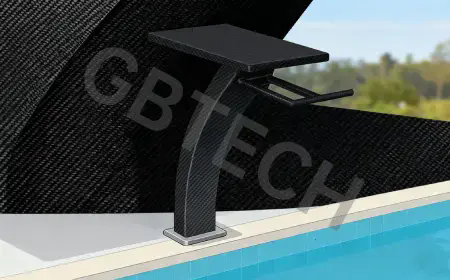
Diving is a sport that demands high technical skill and courage from athletes, and the diving board, as essential equipment, must provide safety and stability. In recent years, carbon fiber—a high-performance material—has been increasingly used in the construction of diving boards, offering reliable support for athletes.
Carbon fiber is a material known for its high strength, light weight, and corrosion resistance. Compared to traditional materials like steel or aluminum, carbon fiber significantly reduces the weight of diving boards while maintaining the same load-bearing capacity. This lightweight nature makes installation and adjustment of the boards more convenient and reduces the load on the foundation.
Additionally, carbon fiber’s high rigidity and shock-absorbing properties ensure structural stability during athletes’ jumps and landings. Carbon fiber does not corrode when exposed to chlorinated water or moisture, significantly extending the lifespan of diving boards. Furthermore, through modern surface treatment, carbon fiber can be made non-slip, ensuring athletes’ safety during takeoff.
Finally, carbon fiber allows designers to create diving boards with smooth, ergonomic shapes, providing not only strength and durability but also user comfort.
In summary, the use of carbon fiber in diving boards makes them lighter, stronger, and safer, while also opening up opportunities for further innovation in sports facilities.