Applications and Advantages of Carbon Fiber Composite Tubes in White Canes
-
Introduction
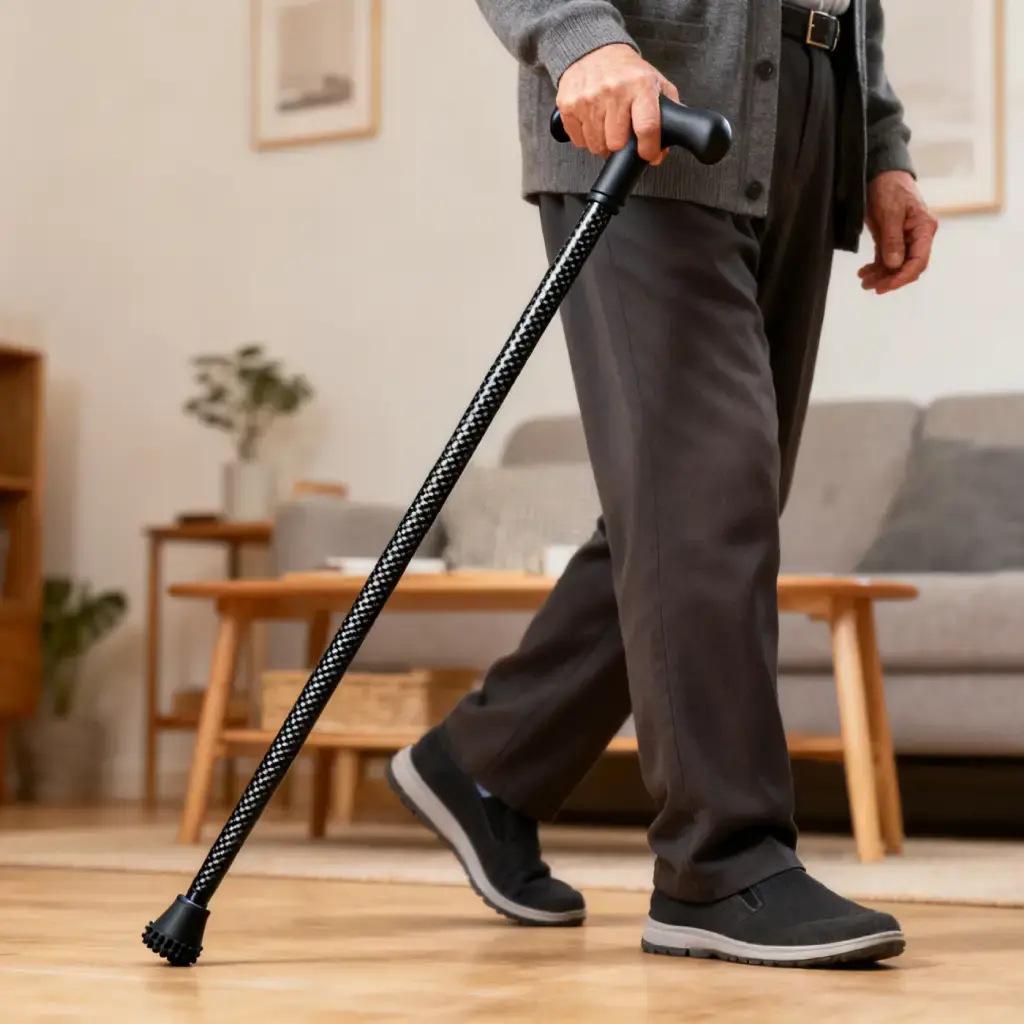
Carbon fiber composite tubes have become an ideal structural material for white canes, thanks to their combination of light weight, high strength, and excellent vibration sensitivity. Compared to traditional aluminum or fiberglass canes, carbon fiber provides better durability, more precise transmission of tactile sensations, and increased user comfort. -
Key Performance Advantages
Summary: A carbon fiber cane weighs 30–50% less than an aluminum equivalent while maintaining high strength and excellent feedback transmission. This allows the user to better sense the ground surface and reduces fatigue during prolonged use. -
Design Features
Structure: Manufactured using pultrusion or roll-wrapping methods. Wall thickness: 0.6–1.2 mm, diameter: 10–14 mm. A folding or telescopic design (3–5 sections) is most common.
Connections: Plug-in (with spring or magnet), telescopic (twist-lock or snap-lock), tips fitted with ABS or aluminum ends.
Surface Finish: Glossy, matte, or ‘forged’ weave texture; non-slip coating or reflective film options available. Complies with ISO 23599 standard.
Tip: Wear-resistant nylon or metal roller, with quick-change threaded connection. -
Manufacturing Process
Material: T300–T700 grade carbon fiber and epoxy resin.
Forming Methods: Pultrusion (mass production) and filament winding (directional strength).
Post-Forming: Cutting, grinding, coating, and assembly after thermal curing. -
Application Advantages
✅ Ultra-lightweight (150–180 g for 100–120 cm length)
✅ High flexural and impact strength
✅ Excellent vibration and tactile signal transmission
✅ Resistance to moisture, cold, and corrosion
✅ Capability for integrating smart modules (ultrasonic sensors, haptic feedback) -
Typical Designs
Folding Carbon Fiber Cane – Compact, connects via magnet or elastic cord.
Telescopic Carbon Fiber Cane – Robust, features a twist-lock mechanism.
Smart Cane – Equipped with ultrasonic sensors and haptic alerts; the tube serves as the structural housing. -
Case Study
GBTECH Case:
GBTECH manufactured telescopic carbon fiber canes for a European assistive devices brand.
T700 tubes with matte woven finish and reflective stripe were used. Weight: 160 g, which is 40% lighter than aluminum.
The product passed EN ISO 11334 testing and demonstrated a 65% increase in flexural modulus. -
Conclusion
Carbon fiber composite tubes are transforming the development of modern white canes. They provide lightness, strength, and precise tactile feedback, enhancing user safety and confidence.
GBTECH supplies custom carbon fiber solutions to equipment manufacturers worldwide.