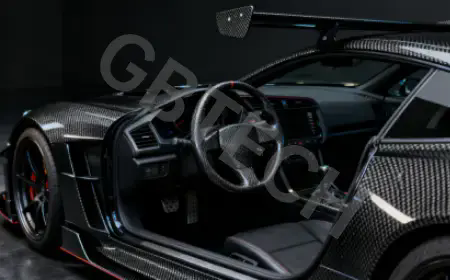
Carbon fiber has become a popular material in automotive tuning due to its light weight, high strength, and unique texture. Different types and densities of carbon fiber fabrics are selected based on their intended application. This article introduces the main types of carbon fiber and their uses in automotive tuning, helping in material selection and procurement.
Main Types of Carbon Fiber
Plain Weave:
Fibers are interlaced in a checkerboard pattern, resulting in a smooth surface. Application: Front/rear spoilers, side skirts. Density: 200–300 g/m².
Twill Weave:
Fibers are arranged diagonally, creating a wavy surface texture. Application: Dashboard panels, interior trim, door panels, hood, roof, mirrors. Density: 200–600 g/m².
3K/6K/12K Woven:
High strength, capable of handling multi-directional loads. Application: Safety cages, chassis reinforcement, lightweight wheels. Density: 300–600 g/m².
Unidirectional (UD):
Fibers aligned in a single direction, providing concentrated strength. Application: Spoilers, diffusers, seat brackets. Density: 200–600 g/m².
3D Woven:
Three-dimensional weaving offering high structural strength. Application: Racing chassis, transmission covers. Density: 400–800 g/m².
Prepreg Glossy:
Pre-impregnated with a glossy finish, ideal for decorative use. Application: Roof, decorative interior panels. Density: 200–300 g/m².
Recommended Materials by Automotive Part
Material Selection Guidelines
Decorative Parts: Use Plain or Twill weave, 200–300 g/m².
Load-Bearing Parts: Use UD, 3K/6K/12K, or 3D Woven, 300–800 g/m², applied in multiple layers if necessary.
Balancing Weight and Cost: Combine Twill and UD weaves, and avoid excessive thickness.